University of Fribourg • Switzerland
Workshop on Topological Deep Learning


This workshop aims to bring together researchers and practicioners from the fields of topological data analysis and deep learning to foster collaboration and exchange of ideas. Through a combination of plenary talks, focused project work, and interactive sessions, we will explore the latest developments in topological deep learning and identify promising directions for future research. Some themes we hope to cover include, but are not limited, to:
Plenary talks are open to the public and will be streamed online, while the rest of the activities of the workshop are for invited participants only. If you want to join online, please contact the organization.
| Monday22 Jun | Tuesday23 Jun | Wednesday24 Jun | Thursday25 Jun | Friday26 Jun | |
|---|---|---|---|---|---|
| 9:00 | Opening remarks Elena Wang Inés García-Redondo Bastian Rieck |
Plenary talk Bei Wang |
Project configuration | Focused project work | Focused project work | 9:30 |
| 10:00 | Plenary talk Kathryn Hess |
Plenary talk Mathieu Carrière |
Focused project work | ||
| 10:30 | |||||
| 11:00 | Coffee break | Coffee break | Coffee break | Coffee break | Coffee break |
| 11:30 | Plenary talk Tolga Birdal |
Plenary talk Anthea Monod |
Focused project work | Focused project work | Presentations & Closing |
| 12:00 | |||||
| 12:30 | Lunch break | Lunch break | Lunch break | Lunch break | |
| 13:00 | Lunch break | ||||
| 13:30 | |||||
| 14:00 | Plenary talk Bernadette Stolz |
Plenary talk Michael Kerber |
Focused project work | Focused project work | |
| 14:30 | |||||
| 15:00 | Coffee break | Coffee break | Coffee break | Coffee break | |
| 15:30 | Poster session | Brainstorming session | Mid-workshop discussion | Focused project work | |
| 16:00 | |||||
| 16:30 |
In this talk I will introduce CocycleHunter, a pipeline for identifying and analyzing circular structure in gene expression data, which integrates methods from topological data analysis with geometric lead-lag analysis. Our method provides a powerful, cohomology-based technique for estimating the phase of genes exhibiting cyclic expression patterns (gene cascades), which has been validated on synthetic RNA transcription models, as well as on real datasets. I’ll explain the math behind the pipeline and illustrate its application to gene expression data, providing novel insights into how cell processes intertwine. This is joint work, led by Kelly Maggs and Markus Youssef, with the collaboration of Cyril Pulver, Jovan Isa, Tâm Nguyên, Wouter Karthaus, Heather Harrington, and Paolo Dotto.
Deep learning transformed artificial intelligence by exploiting structure. Convolutions leveraged the geometry of images, transformers leveraged the structure of sequences, and graph neural networks enabled learning on relational data. Yet many scientific systems—from particle interactions and physical fields to molecular assemblies, cellular processes, and complex engineered systems—cannot be faithfully described by pairwise relationships alone. Their behavior emerges from higher-order interactions, multiscale organization, and topological constraints.
This talk argues that topology is becoming the next organizing principle of AI4Science. Tolga will introduce Topological Deep Learning, a rapidly emerging framework that extends machine learning beyond graphs toward richer topological domains capable of representing interactions among groups, motifs, cycles, surfaces, and higher-dimensional structures. He will explore recent advances in higher-order message passing, sheaf learning, topological neural networks, neural operators, and transformer architectures under a common perspective.
Tolga will then demonstrate how these ideas enable new capabilities across scientific discovery, including molecular foundation models, topology-aware generative models, learning on biological and physical systems, and operator learning for scientific simulation, presenting an emerging scientific ecosystem from challenges and opportunities to open source software.
Topological data analysis (TDA) offers powerful tools for studying biological phenomena. In this talk, I will present recent applications to spatial and dynamic biomedical data. First, I will discuss topological model selection in tumour-induced angiogenesis, where TDA combined with approximate Bayesian computation enables parameter inference and objective comparison of spatial models. Second, I will present two relational TDA techniques based on Dowker and Witness complexes that encode spatial relation in multispecies data, i.e. datasets with multiple subtypes of data points. Our relational TDA features can extract biological insight and integrate naturally with popular machine learning approaches for spatial data, such as graph neural networks. Finally, I will show how we can apply path signatures to capture underlying structural relations in time series of multivariate dynamical processes, such as neural recordings.
Modern scientific discovery and artificial intelligence increasingly rely on high-dimensional latent representations that capture complex structure, semantics, and functionality. Yet understanding the organization of these representation spaces remains a fundamental challenge. In this talk, I will present two complementary research efforts that leverage Topological Data Analysis, particularly the Mapper algorithm, to reveal hidden structure in complex data representations. The first project, Chemical Mapper, explores the latent spaces learned by geometric deep learning models for molecules. By constructing topological summaries of chemical latent spaces, Chemical Mapper enables visual exploration of the vast chemical landscape, uncovering meaningful patterns related to molecular scaffolds, functional groups, chemical properties, and pathways of structural and functional evolution. These topological representations provide an interpretable lens into how deep learning models organize chemical knowledge and support the discovery of novel compounds. The second project, TopoAlign, extends topology-based analysis to the study of neural representations themselves. Rather than focusing solely on geometric similarity, TopoAlign introduces a topology-aware framework for comparing representations across models, layers, and modalities. Through coordinated Mapper graph visualizations, structural correspondence detection, and motif-based analysis, the framework reveals both global and local alignment patterns, offering new insights into how different models encode and organize information. Together, these projects demonstrate how topology serves as a powerful bridge between visualization, representation learning, and scientific understanding. By capturing the global structure of high-dimensional representation spaces, topological approaches enable researchers to navigate complex domains such as chemical space and to uncover, compare, and interpret the internal organization of modern AI systems.
Topological data analysis (TDA) is a rapidly growing area of data science, whose most common descriptor is persistent homology, which tracks the topological changes in growing families of subsets of the data set itself, called filtrations, and encodes them in an algebraic object, called a persistence module. The algorithmic and theoretical properties of persistence modules are now well understood in the single-parameter case, that is, when there is only one filtration (e.g., feature scale) to study. In contrast, much less is known in the multi-parameter case, where several filtrations (e.g., scale and density) are used simultaneously. Since multi-parameter persistence modules usually encode information that is invisible to their single-parameter counterparts, it is critical to build tractable proxies for them, ideally with some theoretical robustness guarantees. In this talk, I will introduce MMA (Multipersistence Module Approximation): an algorithm based on matching functions for computing instances of approximate decompositions of any multi-parameter persistence module, with some precision parameter δ > 0. By design, MMA can handle an arbitrary number of filtrations, and has bounded complexity and running time. Moreover, MMA is robust: when computed with so-called compatible matching functions, MMA produces approximate decompositions that preserve diagonal barcodes. Finally, I will present a range of applications where approximate decompositions produced by MMA can improve upon existing single-parameter TDA models. Joint work with: David Loiseaux, Andrew J. Blumberg
Topology has been remarkably successful at powerful tools for extracting robust and interpretable geometric information from complex high-dimensional data. In this talk, I will explore how persistent homology can be used to study the evolving geometry of representation spaces in large language models (LLMs). Through two case studies—adversarial influence and supervised alignment—I will show that persistent homology identifies stable topological signatures of representational change across a wide range of model architectures and scales. Some examples I will overview include a characteristic topological compression induced by adversarial manipulations and distinct topological trajectories arising during alignment. Our results demonstrate how topological methods can uncover meaningful structure in the latent spaces of modern foundation models and suggest new opportunities for applying topological data analysis to questions of learning, robustness, and representation in deep neural networks.
Efficient computational tools for generating and processing multi-filtered filtrations have become increasingly available over the past few years. I will survey some of the algorithmic advances from our research group and demonstrate how they connect with each other to form computational pipelines. These tools enable multi-parameter analyses of point clouds of sizes that were previously out of reach.
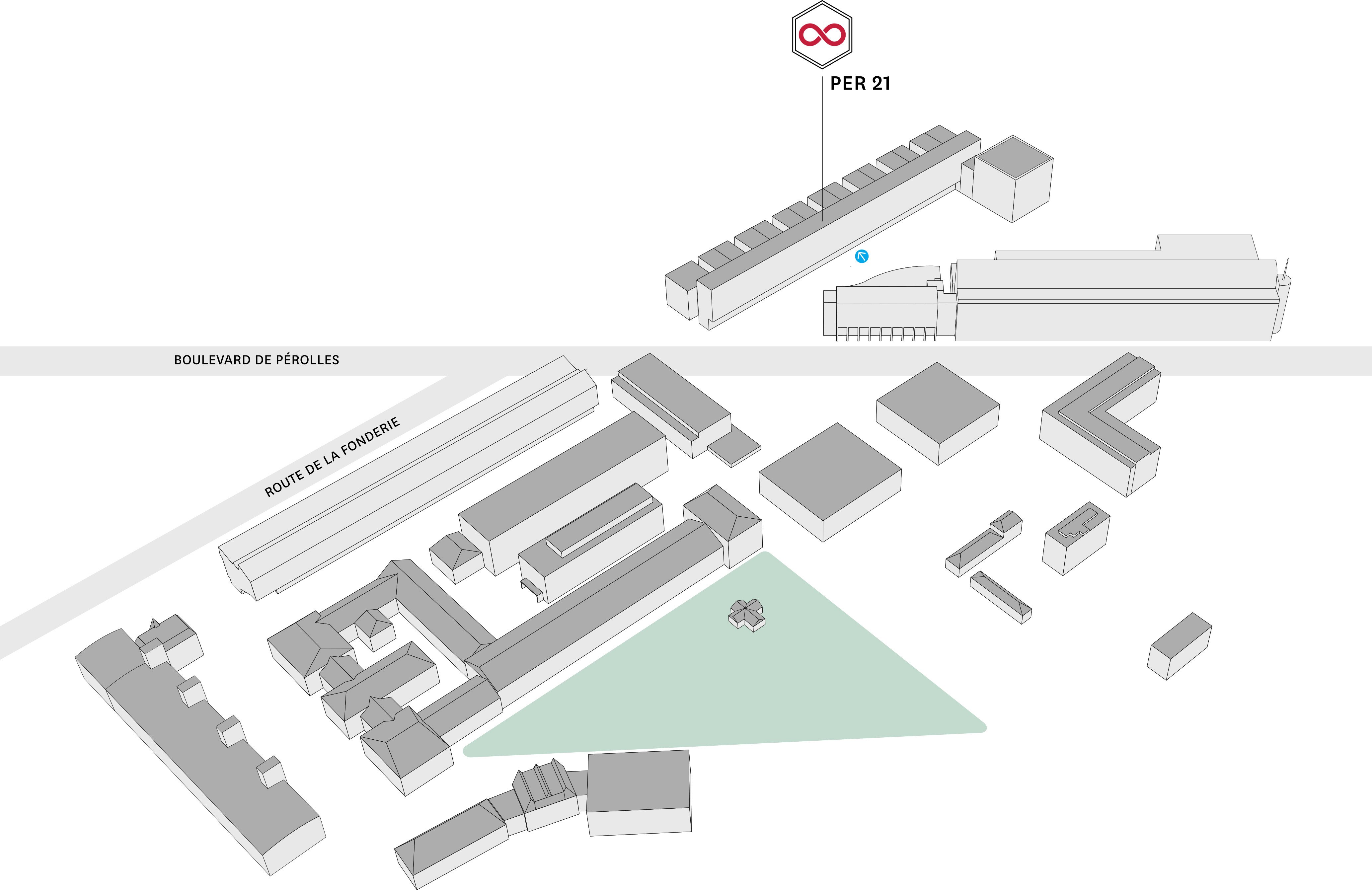
Building PER 21, Room G230, University of Fribourg
Fribourg, Switzerland
Fribourg has a main train station (Fribourg/Freiburg) with direct connections to Geneva (~1 h 20 min), Bern (~25 min), Lausanne (~50 min), and Zurich (~1 h 40 min). The university campus is a short bus ride or walk from the station.
Phone +41 77 477 29 76
This workshop is made possible thanks to the generous support of the following funding agencies and institutions:
This workshop is supported by the Swiss National Science Foundation (SNF), Scientific Exchanges programme.